Ideas for tighter margins and cleaner commercial control.
Practical thinking on estimating, procurement, tendering and cost-value reconciliation — from the team building Vyntworks.
 Quoting
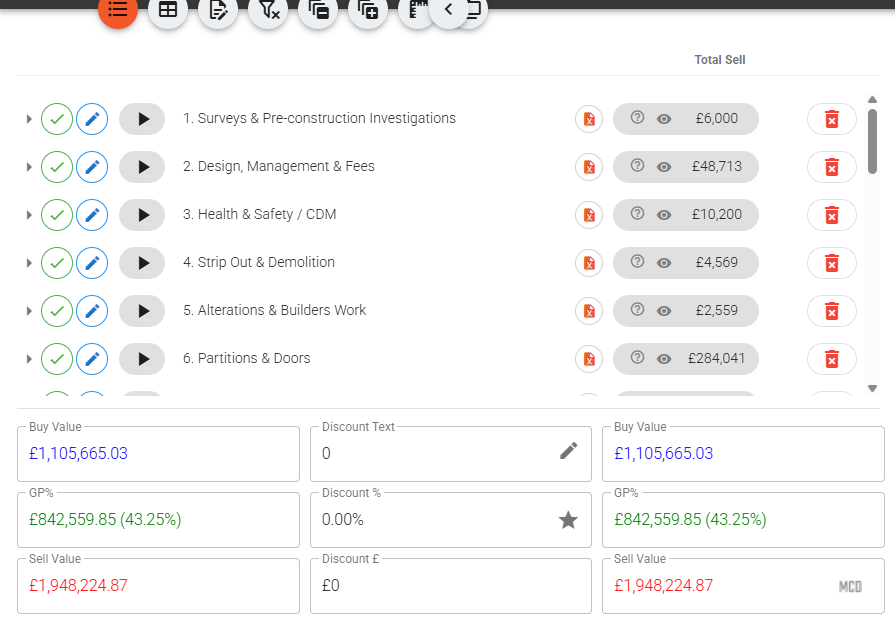
Undo a bad afternoon: quote snapshots and restore
Someone reworks a quote for three hours, saves over the good version and goes home. Version History means that afternoon is recoverable in a click, not a rebuild.
 Cost Control
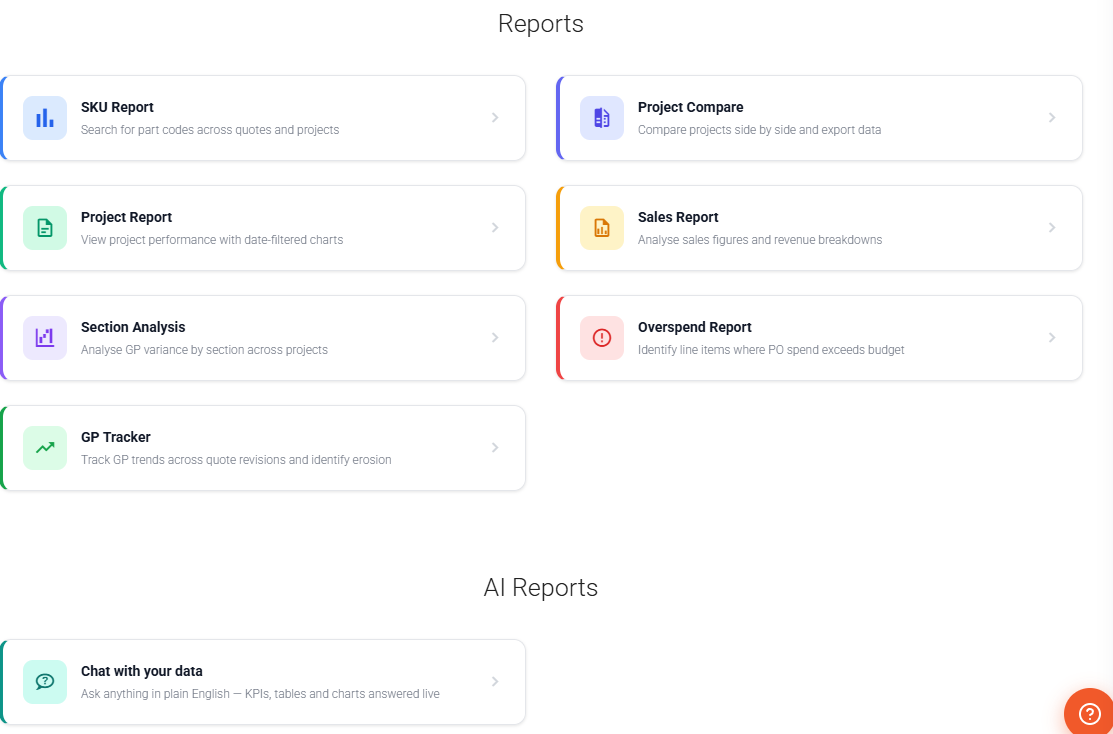
Final accounts that reconcile themselves as the job runs
The final account is usually a fortnight of reconstruction at the end of a job — here is how to make it a running total that settles itself as the work proceeds.
Integrations
Estimating and accounts that never talk: the hidden cost
When your estimating system and your accounts package don't talk, the gap between them gets paid for in re-keyed invoices, duplicate contacts and month-end guesswork.
Fast Quotes
Fast quotes: your standard estimate in one click
If you price the same job type again and again, you shouldn't be rebuilding the estimate from a blank page every time. Here's how templated fast quotes work.
Invoicing
Phased invoice schedules that always total 100%
Phased billing only works when every slice adds up to the whole. How to build deposit-and-stage invoice schedules that always balance to 100%.
Multi-currency
Cross-currency construction projects, without spreadsheets
Running a job in euros, dollars or francs shouldn't mean a side spreadsheet of hand-typed FX rates. Here is how to keep foreign-currency work penny-perfect.
 Quoting
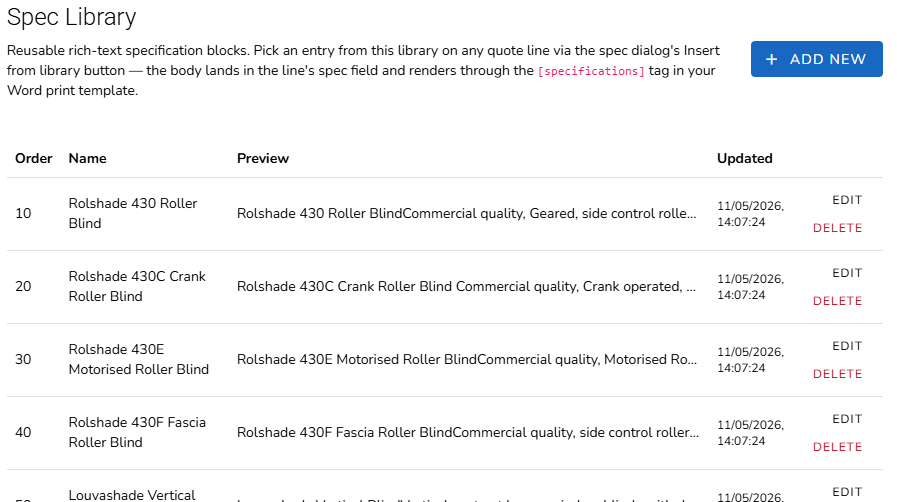
One spec library, every quote consistent
When your specification text lives in whichever old quote someone copied it from, no two tenders describe the same product the same way. Here is what changes when the wording lives in one place.
Estimating
Estimating from a PDF drawing in minutes, not days
Most estimators still measure a plan in one tool and price it in another, then re-key the quantities between them. Here is what changes when the takeoff and the estimate are the same document.
Cost Control
What cost-value reconciliation actually tells you (and when it's already too late)
A CVR is not a monthly ritual for the finance meeting. Done live, it is an early-warning system — here are the four numbers it puts side by side and why the timing matters more than the figures.
 Procurement
Purchase order sign-off that protects margin without the bottleneck
Approval rules are meant to stop money leaving before someone has checked it. Set too loosely they protect nothing; set too tightly they bury procurement. Here is how to get both right.
Variations
The change you did the work for but forgot to charge for
A client asks for a change, the team does it, and in the rush it never gets captured, priced and approved. The cost lands on you; the value never lands on them. Here is how to stop variations slipping through.
Tenders
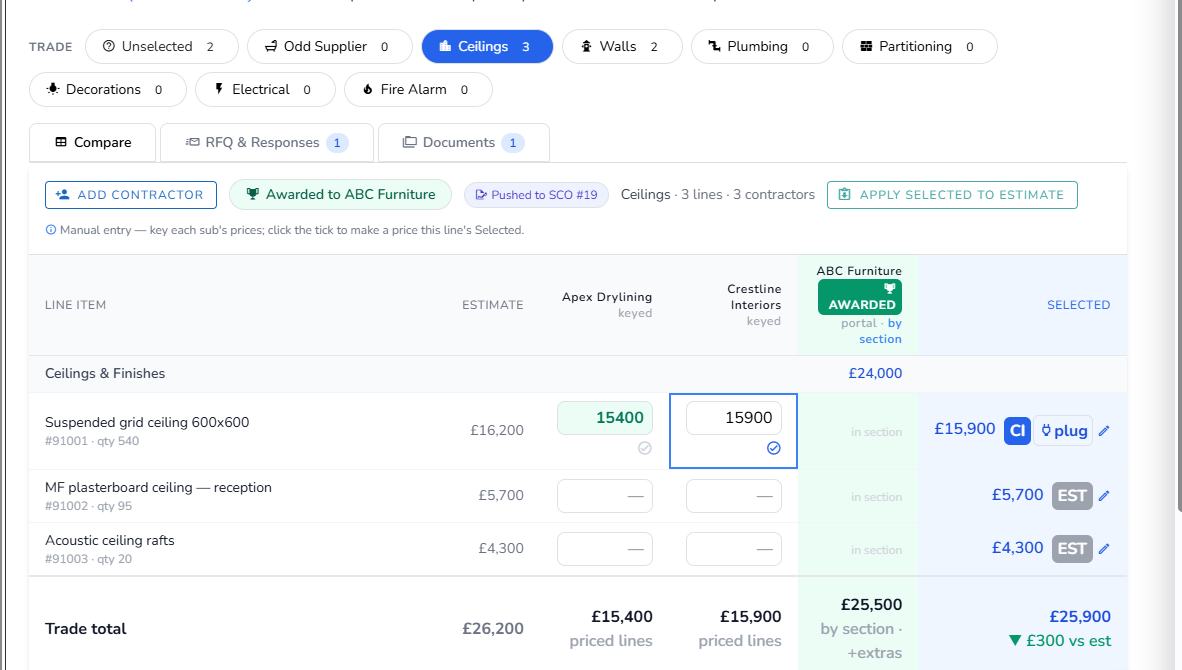
Comparing subcontractor prices line-by-line, not apples to oranges
Three subcontractors quote the same package three different ways — different inclusions, different exclusions, different line structures. Picking the cheapest headline number is how you buy a problem. Here is how to compare like for like.
Cost Control
The four places fit-out margin quietly leaks away
Margin is rarely lost in one dramatic moment. It drains out of the cracks between estimating, procurement and the final account — here is where to look.
Quoting
Why "which version is live?" is quietly costing you jobs
When three revisions of the same quote are floating about in inboxes and shared drives, the wrong number eventually goes out — and you find out at the worst possible moment.
Projects
From won tender to live project without re-keying a single line
Winning the job should be the easy part. Too often it kicks off a week of copying a priced estimate into a project system — and that re-keying is where the budget you won on quietly drifts.
Commercial terms, in plain English
Short, practical definitions of the terms that decide whether a job makes money — and where each one shows up in Vyntworks.
Applications for payment, explained
How contractors actually get paid — the valuation, the application, the certificate and the gaps between them where money goes missing.
Read →Prelims in construction, explained
Preliminaries are the cost of being on the job at all — site setup, supervision, welfare, access. Priced badly, they are the quietest hole in a tender.
Read →Retention in construction, explained
The percentage held back from every payment, why it exists, and why so much of it is never collected — plus how to make sure yours is.
Read →What is CVR? Cost value reconciliation, explained
The report that puts what a job should cost next to what it is actually costing — and why the timing of it matters more than the arithmetic.
Read →What is WIP in construction? Work in progress, explained
Work you have done but not yet been paid for is an asset on paper and a risk in practice. Here is what WIP really measures and why it deserves a weekly look.
Read →What is a variation in construction?
Any change to the agreed scope is a variation — and every one worked without paper is margin given away. The definition, the discipline and the trap.
Read →What is committed cost?
The money you have promised is as spent as the money you have paid. Why committed cost is the earliest honest signal a job gives you.
Read →What is takeoff in construction estimating?
Measuring quantities off the drawings is the foundation every price stands on. What takeoff involves, why "taking off" badly loses tenders twice, and what good looks like.
Read →Theory is cheap. See it on your own quote.
Book a walkthrough and we'll import one of your real spreadsheets so you can see the difference live.