You win the fit-out. The estimator who spent three weeks pricing partitions, ceilings, M&E and finishes hands over a tender that the client has signed off on. Then, on day one of delivery, someone opens a fresh project system and starts typing it all in again — section by section, line by line — so the project manager has something to track costs against.
That re-keying step feels like admin. It is actually one of the most expensive moments in the whole job.
Every re-key is a chance to lose the number you won on
The figure you committed to in the tender is precise. It has a buy price and a sell price on every line, a structure that mirrors how the job will actually be built, and a margin that the commercial team signed off. The moment that has to be retyped — or pasted from a spreadsheet into a different tool — three things start to go wrong.
First, lines get dropped or merged. A sundries line that carried two percent of the job's contingency doesn't make the cut because it looked trivial. Second, costs get rounded or "tidied" on the way across, and the project budget no longer matches the tender. Third — and worst — it takes days. The PM can't raise a single purchase order until the project exists, so procurement stalls while someone rebuilds a number that already existed in full.
By the time the project is finally set up, it is a copy of the won tender, not the tender itself. And a copy is something you now have to keep in sync by hand for the rest of the job.
In Vyntworks, you convert — you don't re-key
When a quote is won in Vyntworks, you don't start a project from scratch. You convert the quote to a project. The quote's entire structure flows straight through: every section, every line, every quantity, every buy and sell price, in the same hierarchy you priced. There is no retyping and no translation step where margin can leak.
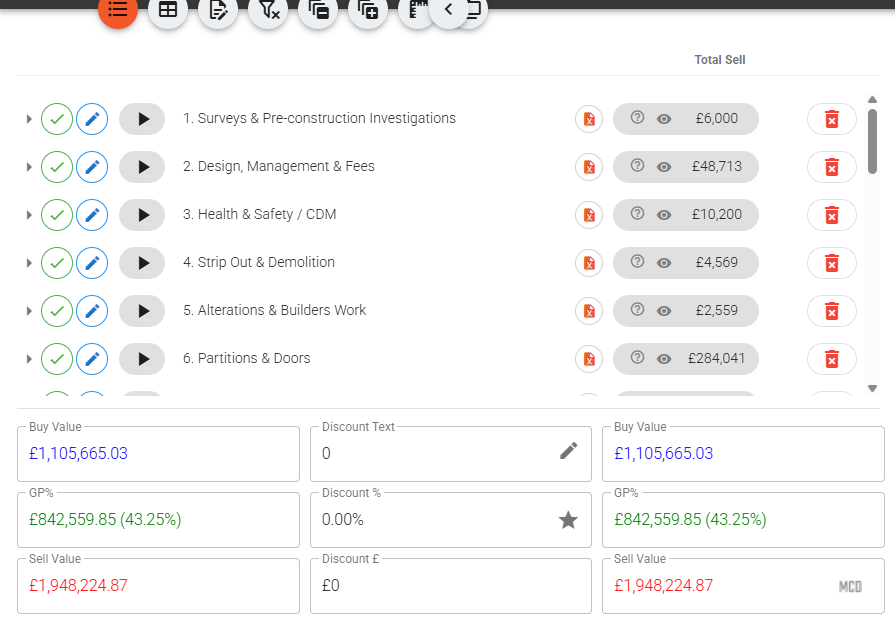
The Convert dialog handles the few things that genuinely belong to delivery rather than estimating — for instance it pre-fills the authoriser who will sign off purchase orders on the job (your team's authoriser, or the company default), and you can change it before you confirm. Confirm, and the project workspace opens already populated with the number you won on. The lines you priced are the lines you now deliver against.
That single design decision closes a whole category of error. The project budget is the tender, not a fallible reproduction of it. There is nothing to reconcile between "what we quoted" and "what we set up", because they are the same connected model.
Procurement starts the moment you convert
Because the project carries the priced lines, the PM can act immediately. Right-click a section in the project and raise a Purchase Order against those exact lines to a supplier, or a Subcontract Order to a subcontractor — each one anchored to the estimated cost it's committing, so committed spend can be tracked against what you priced rather than against a guess.
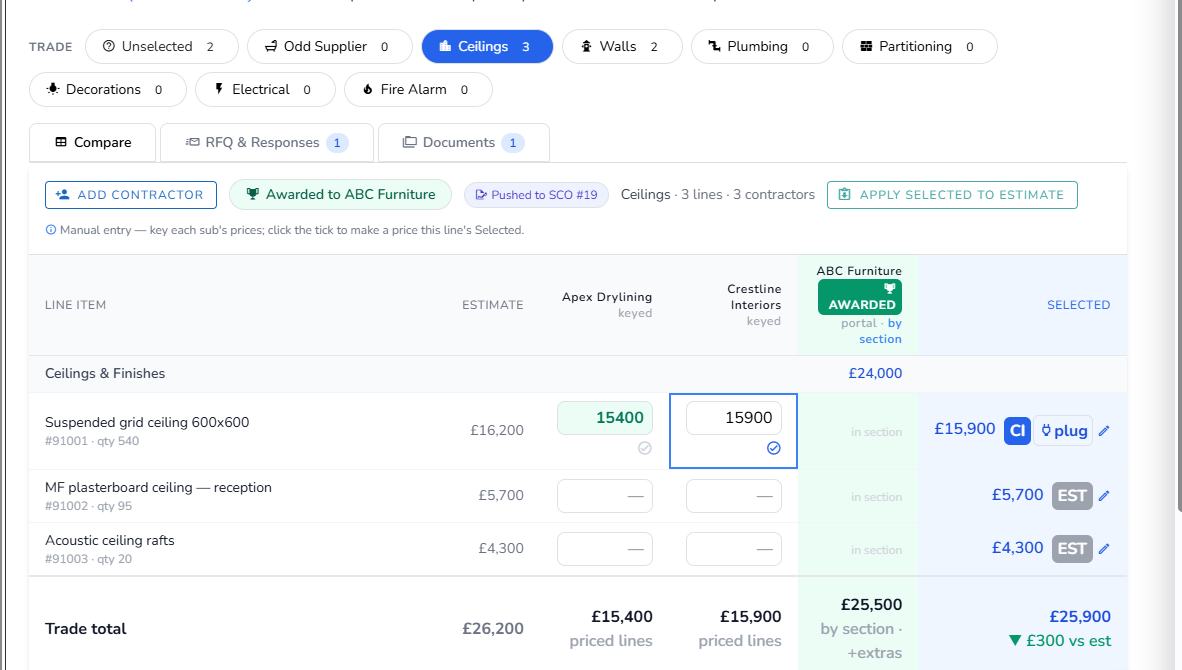
If you'd rather test the market on a package before you commit, you can open a tender board straight from the project lines, compare subcontractor prices like-for-like, and award the winner — the order flows back to the project from there. Either way, procurement is working off the won number from hour one, not waiting on a setup job.
The same is true of change. When the client asks for something extra mid-job, you raise a variation against the relevant section in the project — client, internal or subcontractor — with approval built in, so the scope change is captured against the same model the rest of the job lives in. Nothing gets stranded in a separate tracker.
One model, tender to delivery
The thread running through all of this is that there is no handover gap. The estimate, the project, the orders raised against it and the variations on top are one continuous record. Win the job, convert it, and the team is delivering against the exact figure the commercial lead approved — not a hand-built approximation that drifted on the way in.
That is the difference between treating "won" as the start of a week of data entry and treating it as a single click that puts a live, fully-priced project in front of your delivery team.
If your team still rebuilds every won tender by hand, book a walkthrough and we'll convert one of your own quotes into a live project so you can watch the re-keying disappear.