Estimating that speaks fluent fit-out.
A fit-out is priced the way the building reads — floor by floor, section by section, package by package. Vyntworks structures the whole job that way from the first estimate to the final account, so the number you win on is the number you manage against.
Set up by our team. We load your pricing and templates at setup, and your team learns in the Vyntworks Academy.
Price the building the way it's drawn.
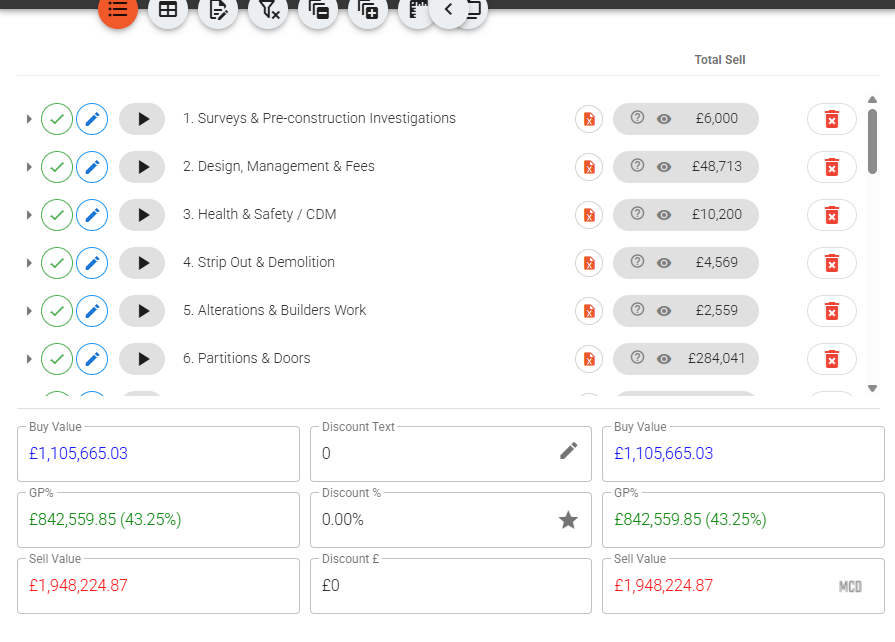
Multi-floor, multi-section estimates that mirror the layout — reception, open plan, meeting suites, washrooms — with quantities measured straight off the issued drawings. When the client wants oak instead of laminate on the feature wall, you revise once and every total moves with it. And when a drawing is re-issued, a drift badge flags exactly which quantities moved — so a revision never quietly leaves your price wrong.
- Section-by-section estimates that mirror the building
- Takeoff by area, length and count from the PDF drawings
- Drift flags exactly which quantities moved when a drawing is re-issued
- One live quote version — no more REV-C_final_v2.xlsx
- Presentation Mode: a margin-free view for the client meeting
Buy every package right — and catch every change.
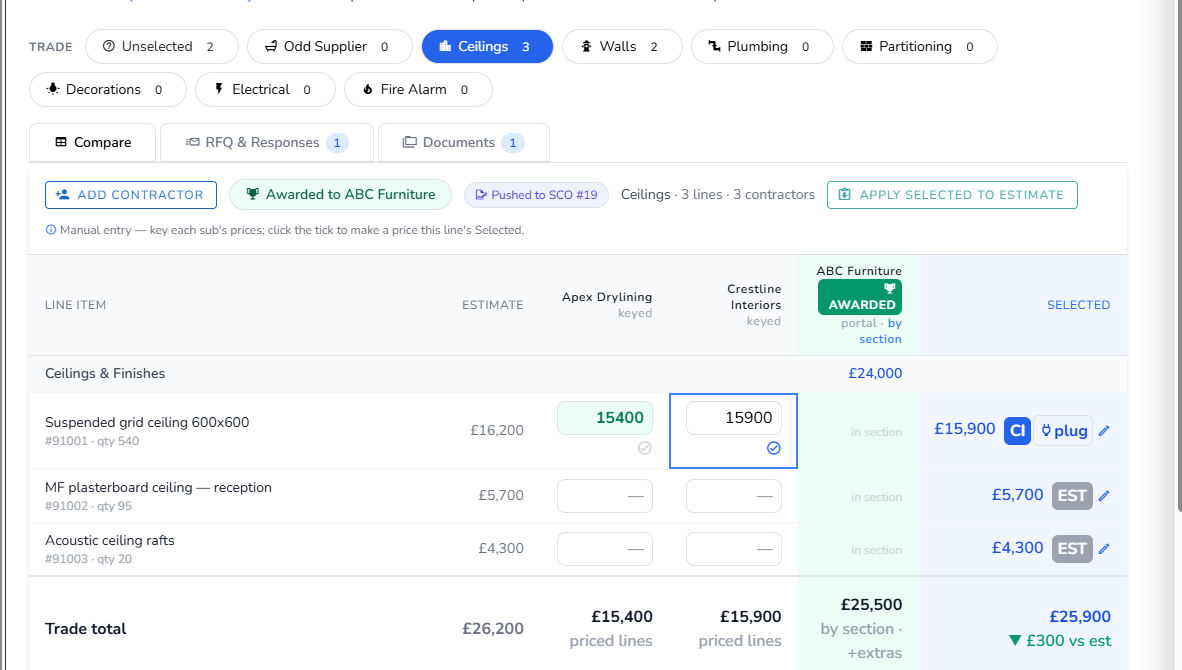
Tender ceilings, partitions, M&E, joinery and flooring packages to your subcontractors and compare returns line by line before you award. Then, when the client says “while you're here, can you just…”, the variation goes on paper in a minute — not into free work.
- Sub-package tendering in a secure online portal
- Orders authorised by value band — nothing committed unseen
- Client, internal and subcontractor variations tracked to the final account
- Snagging with three-stage sign-off before handover
The margin you tendered, protected to the final account.
Fit-out margin rarely disappears in one bad decision — it drains a few percent at a time across variations, overspent lines and late reconciliation. Live CVR puts budget, committed, actual and valued side by side while there's still time to act, with overspend alerts watching every line.
- Live cost value reconciliation from tender to final account
- Applications for payment with retention handled properly
- Phased invoicing that syncs to Xero
- A governed AI workforce drafting, checking and watching — every action approved and logged
From the tender pack to practical completion.
A commercial fit-out is a dozen trade packages, a tight programme and a client who will change their mind. Here is how a Cat A or Cat B fit-out moves through Vyntworks, step by step.
Read the tender pack
Drop the drawings, specification and tender documents into the Plan Room (part of Vyntworks Intelligence). Vyntworks reads the pack and comes back with a checked brief; nothing becomes a quote until a person clears it.
Price the building the way it’s drawn
Structure the estimate by floor and area — reception, open plan, meeting suites, tea points, WCs — with packages beneath. Quantities come off the issued PDFs by area, length and count.
Prelims and the lines you always forget
Start every fit-out quote from your Default Quote Items: site management, protection, welfare, waste, cleaning, access. Prelims are priced from the programme, not as a guessed percentage.
Tender every package
Ceilings and partitions, M&E, joinery, flooring and decorations each go out as a tender package. The tender board shows every trade’s status on one screen, and awards carry onto subcontract orders as tendered.
Variations as they happen
The client adds a meeting room or changes a finish; the variation is raised with its own price and status the same day. Client, internal and subcontractor variations are each handled the right way and flow onto the valuation once approved.
Snag, hand over, settle the account
Snag each area with photos, assign the trade, close through three-stage sign-off, and value the final account from the same job record.
Cat A or Cat B, the commercial discipline is the same
A Cat A fit-out brings a shell to a usable standard — raised floors, suspended ceilings, base M&E, finished WCs. Cat B fits it out for a particular occupier: partitions, joinery, tea points, AV, branding and furniture. Cat B is where scope moves most, because the occupier is designing as you build. Structuring the estimate by area and package means a revised meeting suite changes one section, not the whole spreadsheet, and Presentation Mode lets you walk the client through the revision without showing your margin.
Programme-led phasing matters too: a phased handover needs phased valuations and a billing schedule that still totals 100% — see phased invoice schedules. The trade packages themselves are covered on the ceilings & partitions and M&E pages. For the habits behind it, read prelims, explained and what a variation is.
Fit-out teams usually ask
We price in Excel with years of rates built up — do we lose that?
No — bring it with you. We set your company up with your pricing model, products and rates, so your first Vyntworks estimate is priced from your own numbers, not a blank library, and your team learns the workflow in the Vyntworks Academy.
Can the client see the quote without seeing our margin?
Yes. Presentation Mode shows a clean, client-facing view with your gross profit hidden, and subcontractor logins are scoped so a sub only ever sees the packages you grant — never your GP.
How do you handle the constant revisions on fit-out tenders?
One estimate, versioned properly. Raise a new revision, set one live, and compare any two to see the lines that changed and the sell delta — so “confirm the figure” is a thirty-second job. See which version is live.
Does it handle both Cat A and Cat B work?
Yes. The estimate structure is yours — by floor, by area or by package — so a Cat A shell-and-core scope and a Cat B occupier fit-out are built the same way, priced from your own rates.
How do we stop “while you’re here” changes becoming free work?
Raise each one as a variation the day it is asked for, with its own price and status. Client variations count on the client position only once confirmed; internal ones go to the authoriser by email. Read the change you forgot to charge for.
Can we tender every trade package from the same system?
Yes. Each trade becomes a package on the tender board with its own pack, bidders, questions and addenda; returns are levelled line by line and the award becomes a subcontract order carrying the conditions the sub priced to.
See it on one of your fit-outs.
Book a walkthrough and bring a live tender — we'll rebuild it in Vyntworks so you can judge it on your own numbers.