Both sides of the package, one commercial picture.
A specialist subcontractor lives in the middle: winning packages from main contractors above, buying labour and material below, and getting paid through valuations, applications and retention. Vyntworks runs all of it on one job model — so the position on every package is a fact, not an opinion.
Set up by our team. We set up your quote-to-application flow, and your team learns it in the Vyntworks Academy.
Tenders priced fast, from rates you trust.
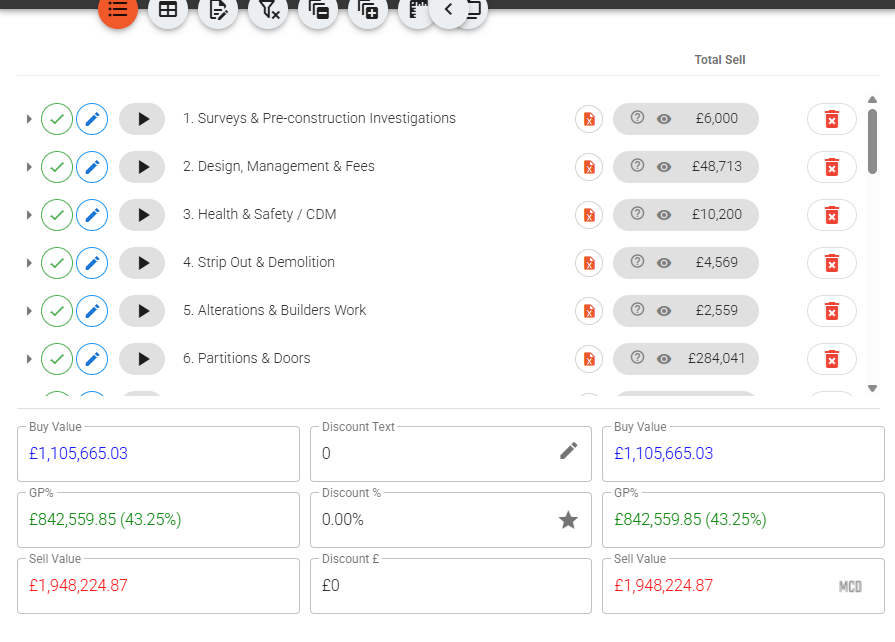
Main contractor enquiries move quickly and expect a structured price. Estimate from your product and rate library, measure quantities off the issued drawings, and return a clean, branded quote — with the margin you intend to make visible to you and invisible to them.
- Estimates from reusable products and rates
- Takeoff straight from the tender drawings
- One live quote version through every revision
- The won tender becomes the live job — nothing re-keyed
You're somebody's main contractor too.
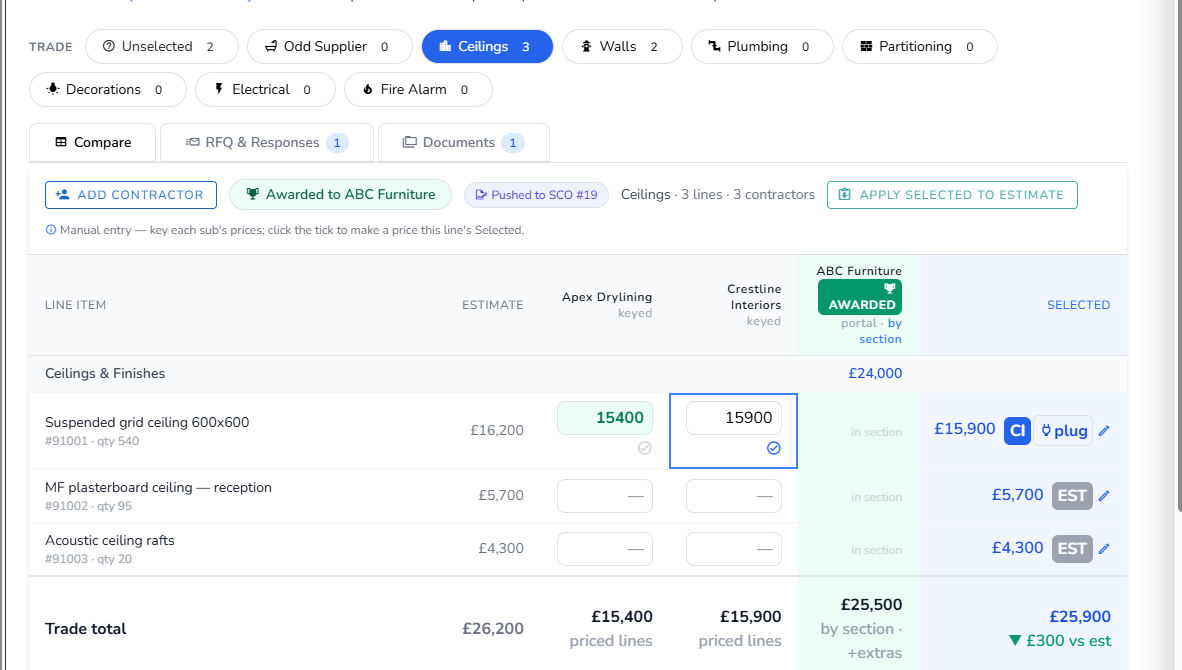
Labour-only gangs, hire, material, your own specialist subs — tender your sub-packages, compare line by line and raise orders with value-band sign-off, exactly as the tier above does to you. Committed cost lands against the package budget the moment each order is raised.
- Manage your own sub-packages and orders
- Variations up the chain and down it, both tracked
- Restricted logins for your subs — your GP stays hidden
Applications, retention and the truth about each job.
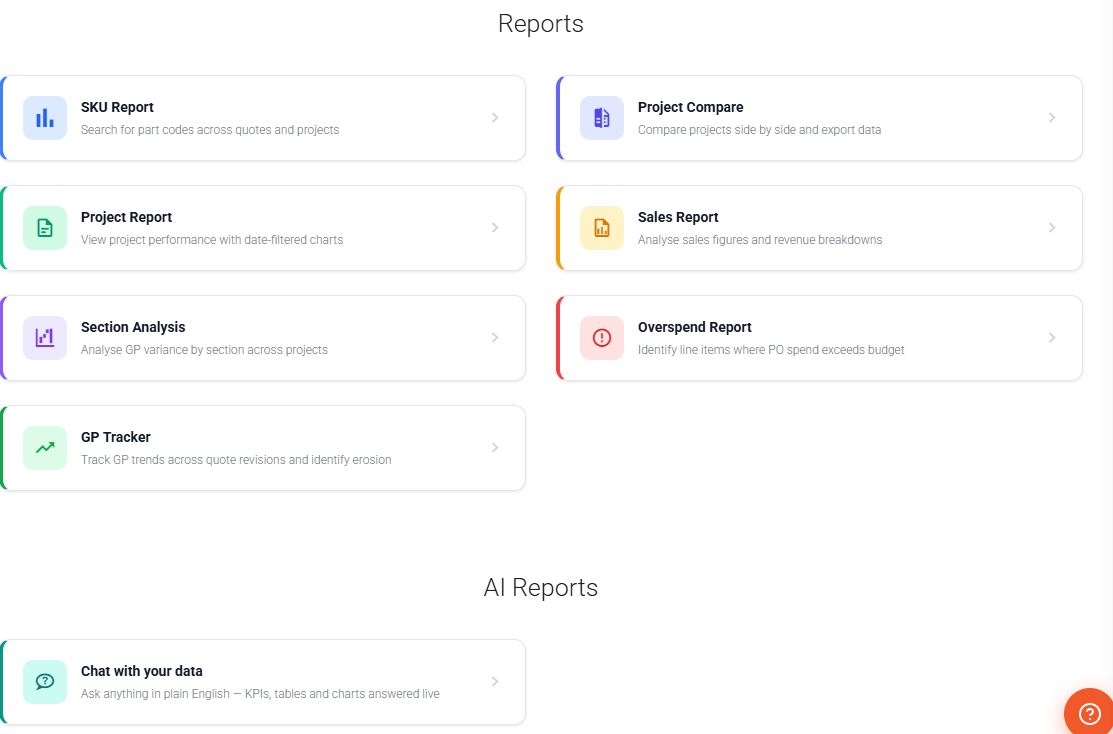
Submit valuations and applications for payment with retention handled properly, invoice in phases synced to Xero, and watch live CVR hold valued work against actual and committed cost — so under-certification shows up in days, not at the final account. Governed AI watches GP movement across every live package and tells you which one needs attention first.
- Applications for payment & valuations with retention
- Live cost-value reconciliation per job
- Company-wide WIP in one view
- Overspend and GP alerts to email, Slack or Teams
Read: what is CVR? Cost value reconciliation, explained →
Working under a main contractor, with your own supply chain below.
A specialist subcontractor carries risk in both directions: a subcontract from the main contractor above, and orders to gangs, hire firms and suppliers below. Here is how a package moves through Vyntworks from enquiry to final account.
Price the enquiry, send it to every bidder
The same package is often priced for several main contractors. Build one quote and print it for multiple clients in a single action — a separately addressed, branded document for each.
Won work becomes the live job
When an enquiry converts, the priced estimate becomes the project budget — nothing re-keyed — and your bids, selected prices and targets carry across.
Labour-only gangs on subcontract orders
Put each gang, hire firm and supplier on a subcontract or purchase order raised from the budget lines, routed by value for sign-off, with the order pack sent automatically.
Give your own subs a restricted login
A freelancer login shows a sub only the quotes, projects and snag lists you grant — never the rest of the company, and never your margin.
Variations up the chain and down it
The main contractor’s instruction is your client variation; the extra work you pass to a gang is a subcontractor variation against their order. Both are tracked, so a change is charged upward as well as paid downward.
Apply, agree, invoice, release retention
Value the period, send the application, record the main contractor’s response line by line over as many rounds as it takes, and invoice net of retention, with a ledger that tracks each release.
Why valuations and CVR matter more when you are the subcontractor
Subcontractors are paid on what the main contractor certifies, not on what was built. Under most subcontracts the payer can issue a notice reducing what is due, and retention is held on every payment until practical completion and the end of the defects period. That makes the gap between work done, work applied for and work certified the real measure of a subcontractor’s cash position — see applications for payment, explained and retention, explained.
Live CVR puts valued work against committed and actual cost on every package, and company-wide WIP shows how much finished work is still waiting to be paid for. When a certificate comes back short, the gap shows in days, with the variation trail beside it. The trade pages for M&E and ceilings & partitions cover the estimating side in more depth.
Guides for specialist subcontractors:
What is CVR? Cost value reconciliation → Applications for payment, explained → What is committed cost? → What is WIP in construction? →
Specialist subcontractors usually ask
Our money is made or lost in the applications cycle — how does Vyntworks help?
By keeping valued work, actual cost and committed cost on the same job in real time. When an application is under-certified, the CVR shows the gap immediately — with the variation trail to argue it — instead of the shortfall surfacing months later in the final account.
Main contractors send enquiries in every format imaginable — can we keep up?
Yes. Price from drawings with takeoff, from a bill with your rate library, or from a supplier spreadsheet turned into priced lines. However the enquiry arrives, it becomes a structured estimate you can revise quickly when the scope moves.
We’re a small commercial team — is the governance heavy?
It scales to you. Value bands mean routine buys flow without ceremony; approval only engages where you set it. The point isn’t bureaucracy — it’s that nothing is committed or changed without someone having chosen it, which is precisely what protects a small team’s margin.
The main contractor’s QS marked our application down — what then?
Upload their marked-up return and Vyntworks reads their figures line by line against yours. Keep yours, accept theirs or counter, row by row, over as many rounds as it takes; the agreed figure is what you invoice and report.
Can we quote the same package to several main contractors at once?
Yes. Multi-client print generates a separate, correctly addressed branded document for each recipient from one quote, in a single action.
How is retention tracked so we actually collect it?
Payment invoices are raised net of retention, and a per-project retention ledger records what is held and when each part is due for release at practical completion and final account. Read retention in construction, explained.
When the main contractor instructs a change, how do we pass it down to our own sub?
Record it as a client variation for the main contractor, and raise the matching subcontractor variation against your sub’s order. The first counts on your client position once confirmed; the second feeds the subcontractor variation report, so the change is charged upward and paid downward on the same job.
See it on one of your packages.
Book a walkthrough and bring a live package — quote, orders and application — and we'll show the whole cycle on your numbers.