Bespoke work.
Repeatable numbers.
Every joinery package is one-of-a-kind — which is exactly why the pricing behind it can't be. Vyntworks gives bespoke joinery a proper commercial spine: material and labour build-ups, supplier orders that commit cost visibly, and change control on every “small tweak” the client asks for.
Set up by our team. We load your products and rates at setup, and your team learns in the Vyntworks Academy.
Material and labour, split honestly on every line.
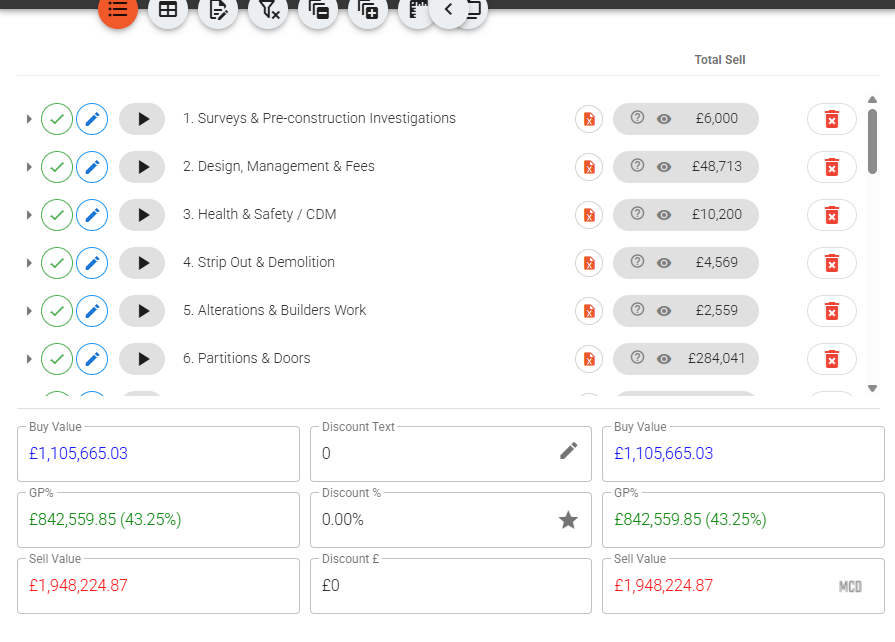
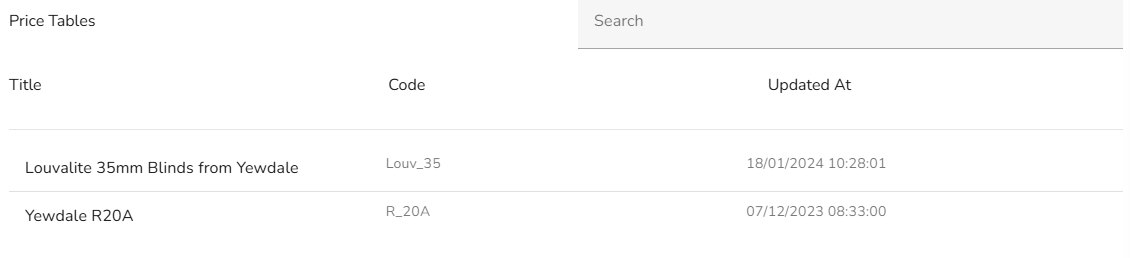
Reception desks, wall panelling, banquette seating, bespoke storage — each item priced with its own material and labour build-up from your product and rate library, so workshop hours and sheet material never hide inside a single guessed rate. House specs come from one library, not copied out of last month's quote with the 2023 rate still in it.
- Material & labour cost breakdowns on every item
- One spec library — every quote consistent
- Workshop vs site labour, visible and priced
- Branded Word & PDF quotes ready for the client
Cost committed on paper, not discovered on the invoice.
Sheet material, ironmongery, finishes, sprayed sub-contract work — each committed through a purchase or subcontract order that lands against the job's budget the moment it's raised. Committed-vs-estimated is visible per line, so a timber price spike shows up before delivery, not at reconciliation.
- Supplier POs with committed-vs-estimated tracking
- Sign-off by value band — small buys flow, big buys get eyes
- Orders filed back to the job automatically
“While you're at it” becomes a variation, not free work.
A drawer here, a finish upgrade there — bespoke work attracts changes, and every unpriced one is margin gone. In Vyntworks a variation takes a minute to raise, carries its own price and status, and rolls into the final account automatically — so the client conversation happens when the change happens.
- Client, internal & subcontractor variations
- Every change priced, stated and tracked
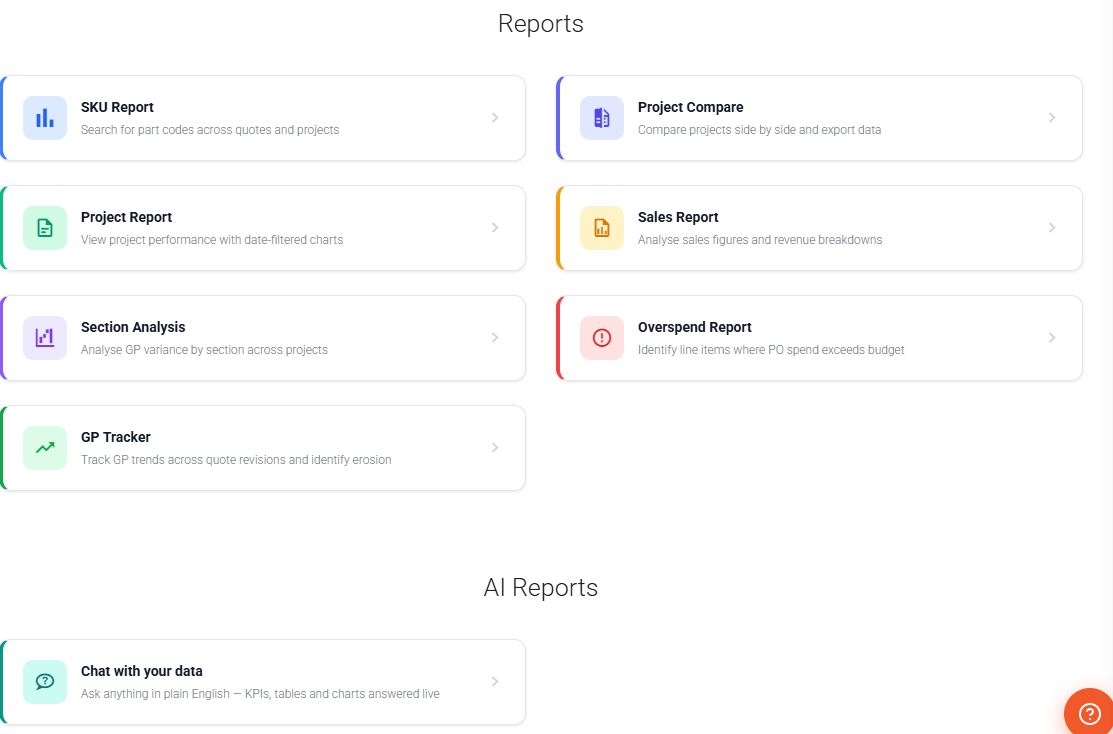
- Live CVR so the job's true position is never a surprise
- Governed AI drafting the paperwork — you approve, it files
Read: the variations you forgot to charge for →
From the design drawing to the installed piece.
Bespoke joinery passes through more hands than most trades — estimator, designer, workshop, sprayer, fitter — and every hand-off is a chance for the number to drift. This is how a typical package moves through Vyntworks.
Schedule the items off the drawings
Count doors, panels, desks and cabinets on the plans and measure linear runs of wall panelling, skirting and worktop. Ask for a schedule — “doors, panelling, reception desk” — and each item comes back measured, flagged for a person, or not shown.
Build each item from priced parts
Assemble every item from sheet materials, lippings and edgings, hardware, finishes and labour held in your products library, all sitting on base costs. When the MDF or veneer price moves, update the base cost once and every product built on it re-prices.
Workshop and site labour, kept apart
Machining, assembly and finishing hours are a different cost from site fixing. Price them as separate build-ups on the line, so the quote shows what the workshop has to deliver and what the installers do.
House specs from one library
Carcass construction, edge detail, finish grade and ironmongery standards come from the spec library and print into your branded Word quote, so every tender describes the same product the same way.
Drawings and approvals on the job
Shop drawings and design revisions follow the job into the tender pack, onto the order and into the project folder. Keep the client approval status on record before anything is cut — revised drawings are the classic source of unpriced change.
Buy, subcontract, install
Sheet material and ironmongery go out on purchase orders; spraying, glazing or specialist installation go out on subcontract orders with the document pack. Value-band sign-off lets small buys flow while big ones get a second look.
Cutting lists, ironmongery and the arithmetic behind the price
Vyntworks does not replace your CNC or cutting-list optimiser — it holds the commercial side of what they produce. If you already work out sheet yield or machining time in a spreadsheet, that arithmetic can sit behind the quote as a Sheet whose cells write the quote lines, so the working-out is on the record instead of on one estimator’s laptop. Per-item fields such as width, height or finish can be declared on imported items and print in the quote.
Ironmongery is a schedule problem: count the doors by type, attach the hardware set to each, and the totals follow the count. When the client swaps a finish or adds a drawer, raise it as a variation with its own price — see what counts as a variation. Revisions to the quote itself are tracked against one live version, as described in why “which version is live?” costs jobs. Many joinery firms deliver into a fit-out main contract, so the same job model works whether you are the main trade or the subcontractor.
Joinery firms usually ask
Every job we make is different — how does a product library help?
Because the components repeat even when the item doesn’t. Sheet materials, edgings, ironmongery, finishes and labour rates are the same building blocks arranged differently — hold them once in the library and a bespoke item is assembled from priced parts instead of estimated from memory.
We work both as a main trade and as a sub — does that fit?
Yes. Quote direct clients with presentation-ready documents, or work as a specialist subcontractor with applications for payment and retention — same platform, same job model, whichever side of the package you’re on.
Can our workshop see what to make without seeing the money?
Yes — access is role-based. Workshop and site users see the job, drawings and snag lists they need; commercial figures like GP stay with the people who should see them.
Does Vyntworks produce cutting lists?
No — it isn’t a cutting-list optimiser or CAD tool. It holds the priced build-up behind each item, and if your sheet-yield arithmetic lives in Excel it can be brought in as a Sheet that writes the quote lines, so the method is shared and versioned.
How do we price ironmongery without a separate spreadsheet?
Count the doors and openings off the drawings, hold each ironmongery set as a product with its own cost, and let the count drive the quantity. Change the set or the count and the line re-prices.
Our spraying is subcontracted — how is that tracked?
Put the sprayer on a subcontract order raised from the estimated lines. Their cost is committed against the budget the moment the order is raised, and any change to their scope is a subcontractor variation tracked against that order.
See it on one of your packages.
Book a walkthrough and bring a recent joinery quote — we'll rebuild it with proper material and labour build-ups, on your numbers.